
The intensive growth potential and feed efficiency of modern broiler genetics have increased the need for feed formulations that precisely meet the nutritional requirements of birds and maintain economic viability at the same time. This requires accurate knowledge of the digestible amino acid content of individual feed ingredients. Near Infrared Spectroscopy (NIRS) can be used to quickly and effectively determine these parameters to support the formulation of broiler feeds.
Literature review
The precise knowledge of the amino acid profile is crucial for the profitability of production, since inadequate amino acid supply has a direct negative impact on growth performance, feed conversion and meat yield. Standardized ileal digestibility (SID), a measure of ileal amino acid digestibility corrected for endogenous loss is commonly used in practical diet formulation for broiler feeds because this approach provides a more precise insight on the availability of amino acids (Stein et al., 2007). Formulation based on amino acids also provides an environmental benefit. Decreasing the overfeeding of proteins decreases nitrogen excretion, which lowers the environmental impact of poultry production (Nahm, 2007). Optimising feed formulations based on SID amino acids also has an economical benefit, since protein sources are generally the most expensive components in feed.
Precise optimisation of amino acids allows for cost-effective formulation without compromising performance. However, this method poses some challenges, in particular for industrially processed ingredients or by-products such as soybean meal, rapeseed meal, sunflower meal, etc., since they show great variation in their protein content and consequently in the digestibility of the individual amino acids. The digestibility coefficients available from some databases account for these variations in a limited manner and are not able to provide real time data, even though it is well-known that the digestibility of amino acids in feed ingredients is influenced by several factors. These factors include the method of processing, the amount of antinutritive factors and fibres, the structure of the proteins and heat treatment. If we consider these ingredients individually, we can say that soybean meal is the most used protein source in broiler feeds. Generally, the digestibility of the amino acids is high (85-92%) but excessive heat treatment can impair the availability of lysine (Parsons et al., 1992). Sunflower meal has a high fibre content that limits the digestibility of the amino acids, especially the digestibility of lysine and threonine (Ravindran et al., 2005). Based in standardised ileal digestibility data, 82% of total lysine and 76% of total threonine can be considered digestible. In the case of rapeseed meal, standardised ileal digestibility of lysine in broiler chickens is 78-83%, while the same value for threonine is 72-78%, and 84-88% for methionine. The standardised ileal digestibility of amino acids shows great variability (demonstrated by literature data), so we need precision tools that are capable of assessing the variability in real time for each batch of ingredients used for production. Tools based on near infrared spectroscopy may provide a solution for the quick prediction of amino acid content in feed ingredients. Initially NIR technology was used for the rapid prediction of classical Weende parameters (dry matter, crude protein, crude oil, crude fibres, ash content) in the feed industry but years of development has opened new dimensions in predicting amino acid content, especially the digestible amino acid content. The main advantage of NIR technology compared to chemical analysis in a laboratory is that it allows for quick, cost efficient and real-time testing of large samples without the use of chemicals to support continuous in-process control and quick decision making. It also provides a cost-effective way to analyse feed ingredients, which is an advantage when handling large amounts of samples. In summary, NIR technology may contribute to increasing the precision of feed formulation, thus promoting better profitability in broiler production (Shurson et al., 2021).
The above considerations justified performing our own studies to compare the effects of feed formulated based on the Aviagen Ross 308 recommendation, the amino acid profiles from the AminoDAT database and on NIR measurements on performance parameters in broilers, as well as production efficiency and profitability.
Own studies
We included ROSS 308 males at a stocking density of 19 birds/m2. The average day-old weight of the chicks was 40 g. The study included 3 treatments (n=769 birds/treatment), and we used a 4-phase feeding program. Feed for the control group was formulated according to the Aviagen recommendations. Feed for the AminoDAT treatment group was formulated according to the amino acid ratios from the AminoDAT database. In the case of this treatment we did not change the amino acid values for the ingredients, we calculated with the fixed values from the feed formulation software. For the AminoNIR treatment SID amino acid content of the main energy and protein sources (corn, wheat, soybean meal, sunflower meal) were optimised based on the NIR measurements, feeds were formulated for SID amino acids according to the recommendation of AminoDAT. Table 1 compares the Aviagen recommendation for the ROSS 308 genetics and the AminoDAT recommendation for each feeding phase. 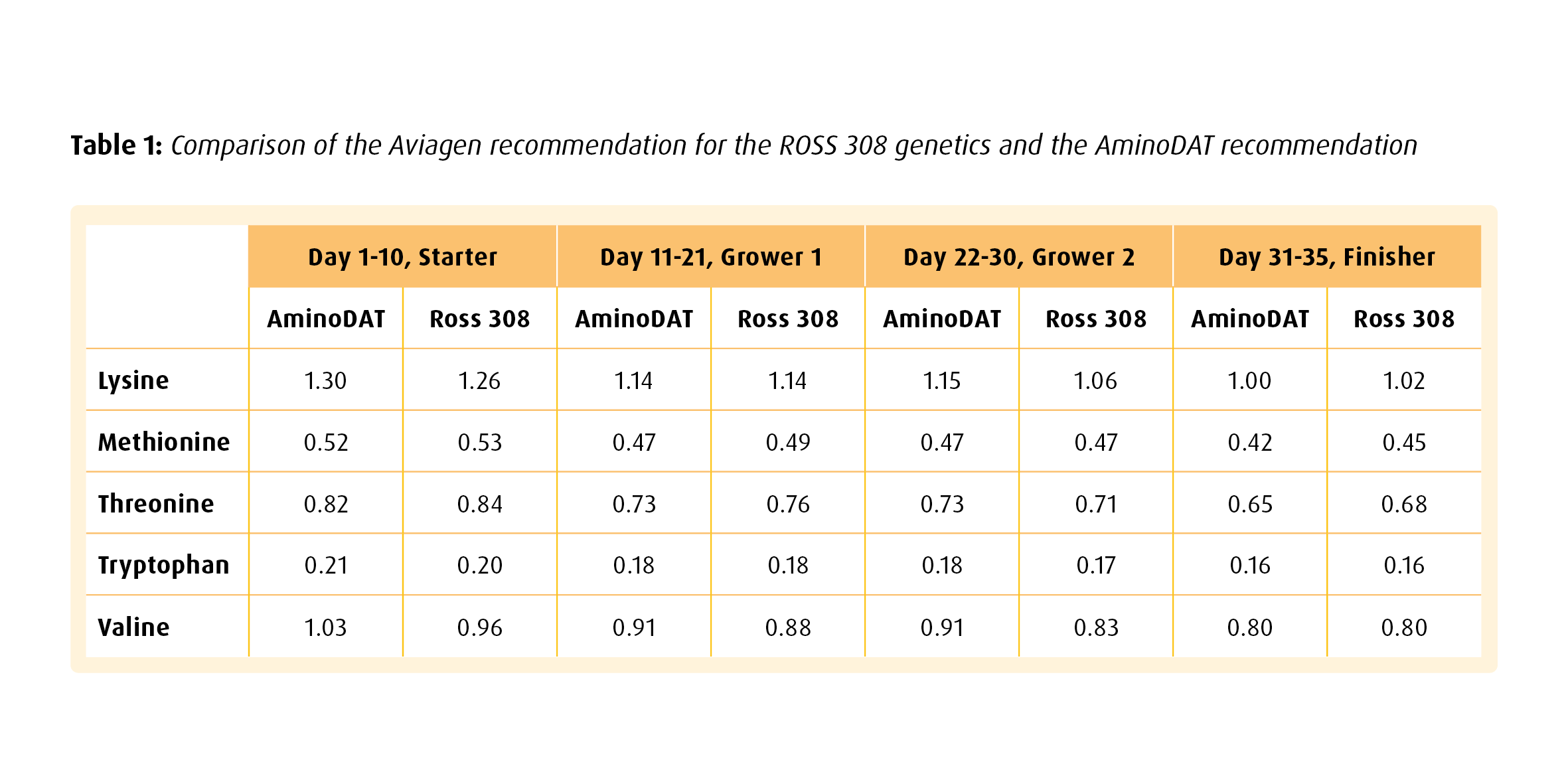 Results and discussion
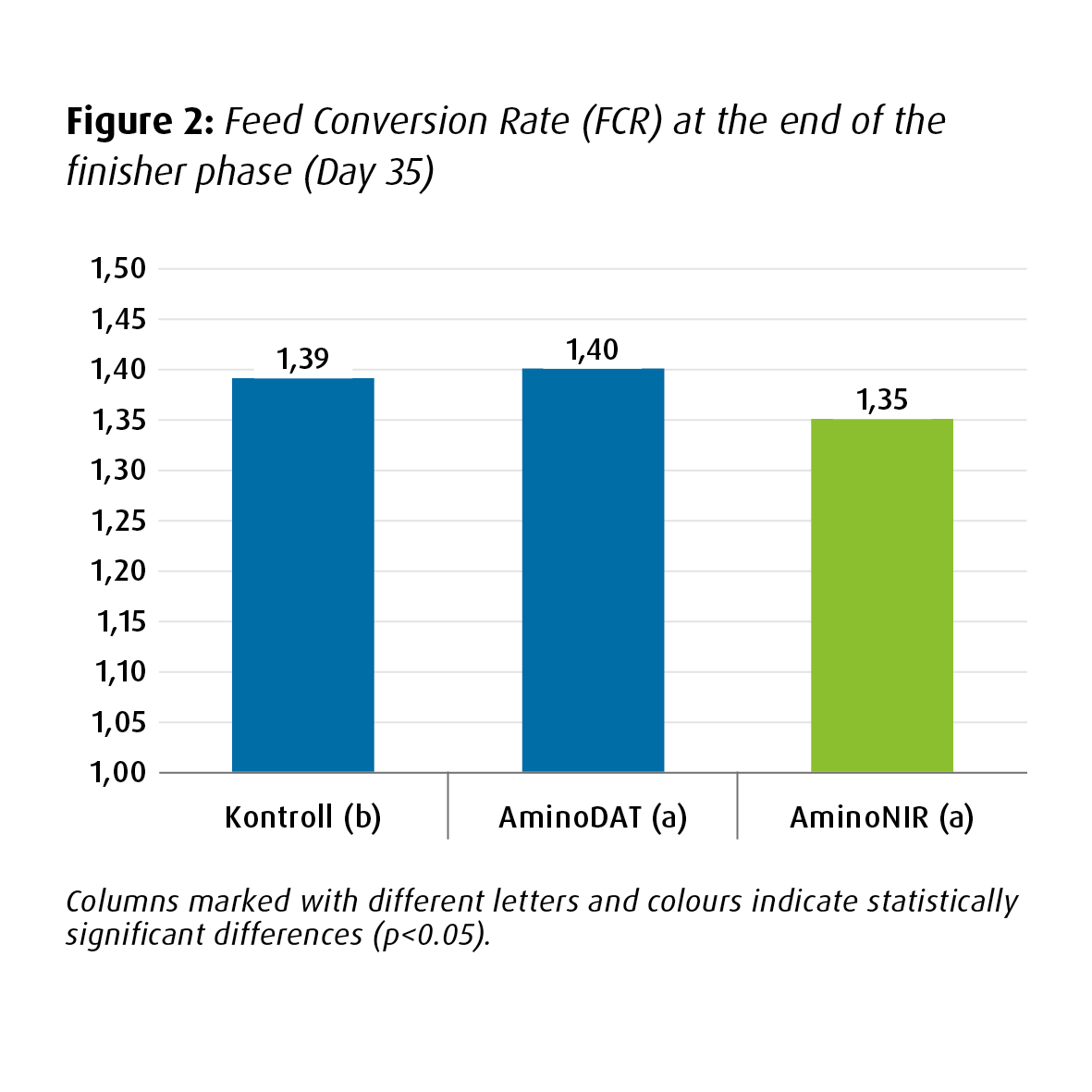
Both the AminoDAT recommendation and the AminoNIR treatment had a statistically significant effect on the end weight compared to the controls (2498 g vs. 2572 g vs. 2579 g; p<0.05). The results are shown in Figure 1. 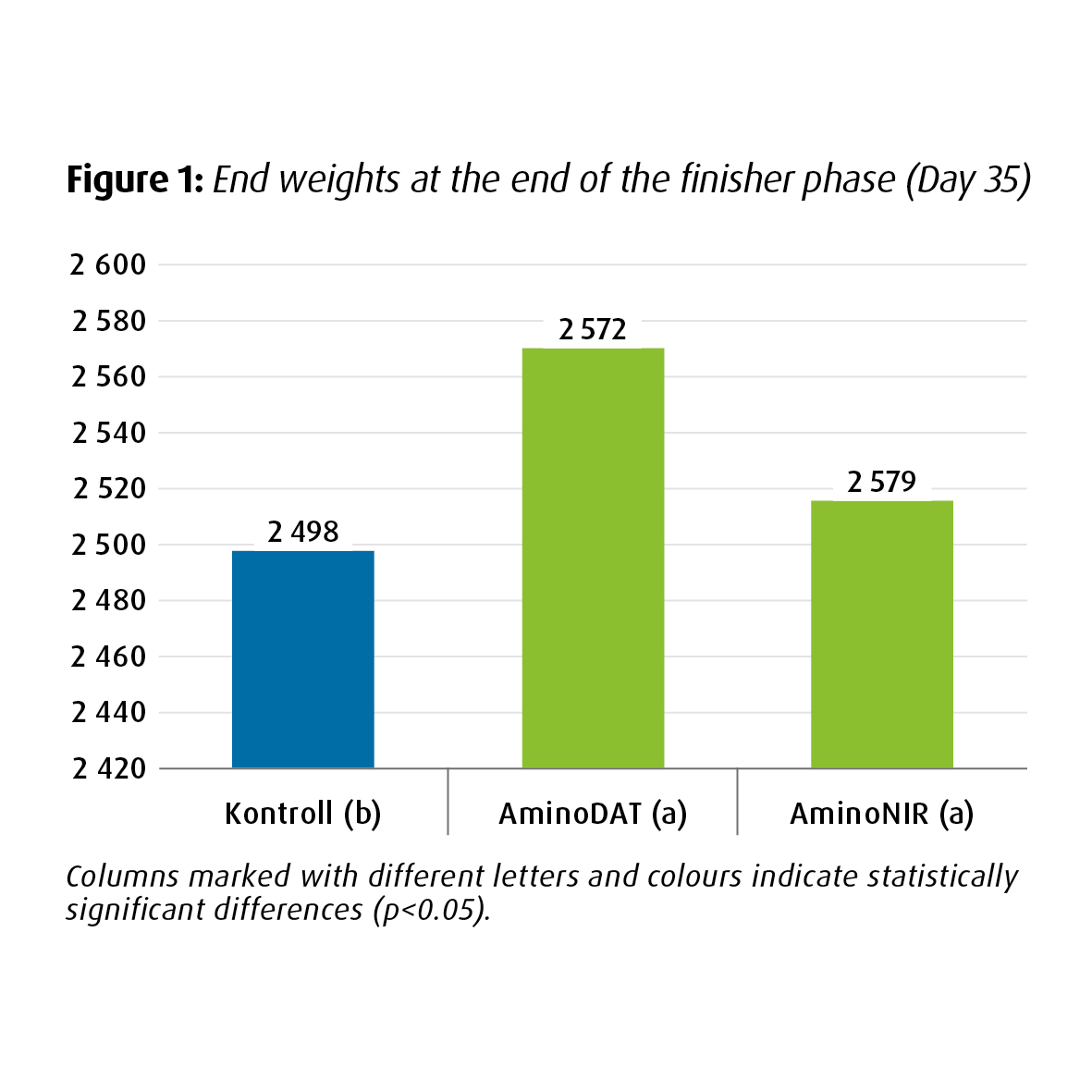 Feeds formulated according to the AminoDAT recommendation did not have an effect on the feed conversion rate for the total cycle, while feeds formulated according to the AminoNIR estimates improved it significantly (p<0.05) (Figure 2).
  Profitability analysis
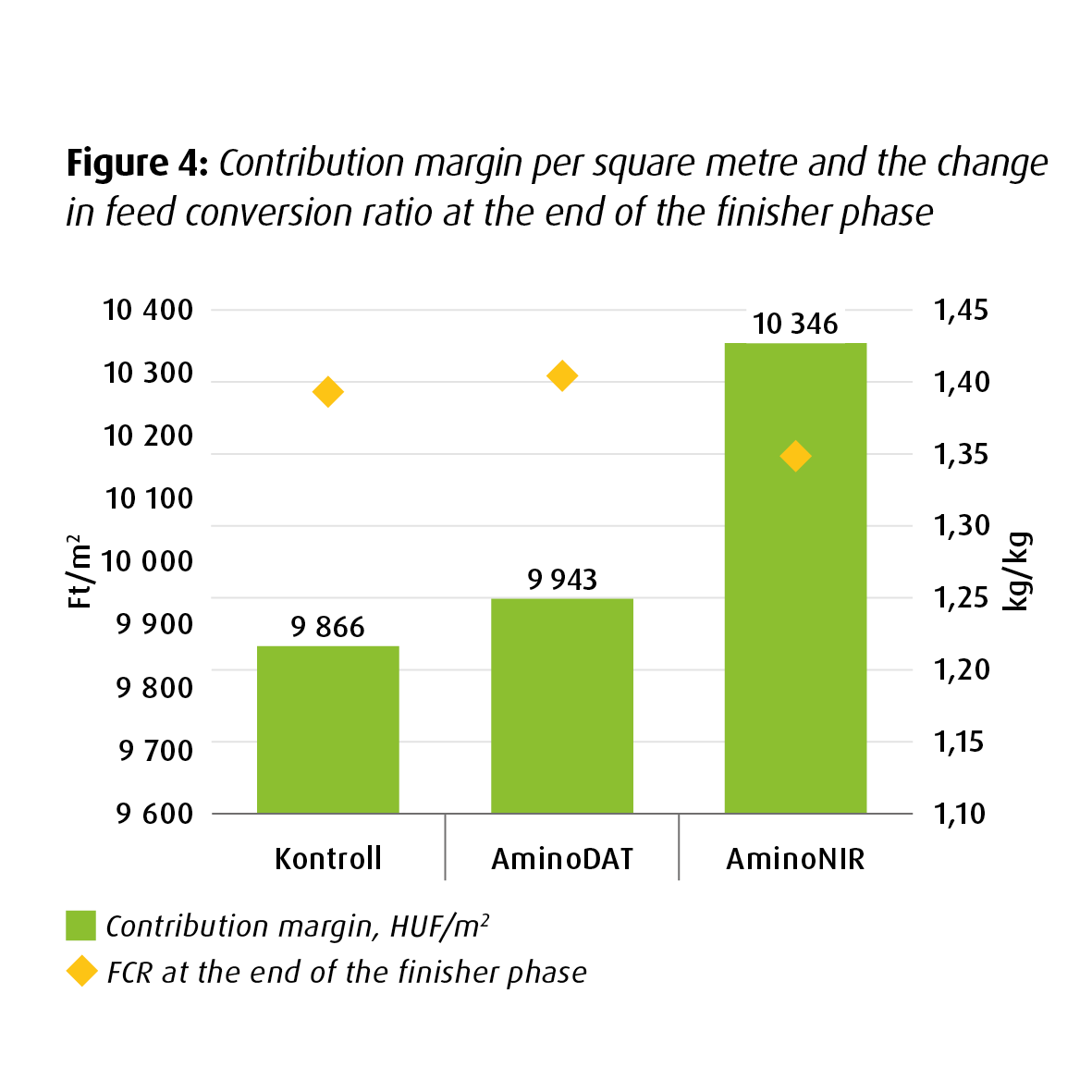
The average feed cost of 1 kg live weight increased by HUF 3.2 in the AminoDAT group and decreased by HUF 3.9 in the AminoNIR treatment group compared to controls (Figure 3). 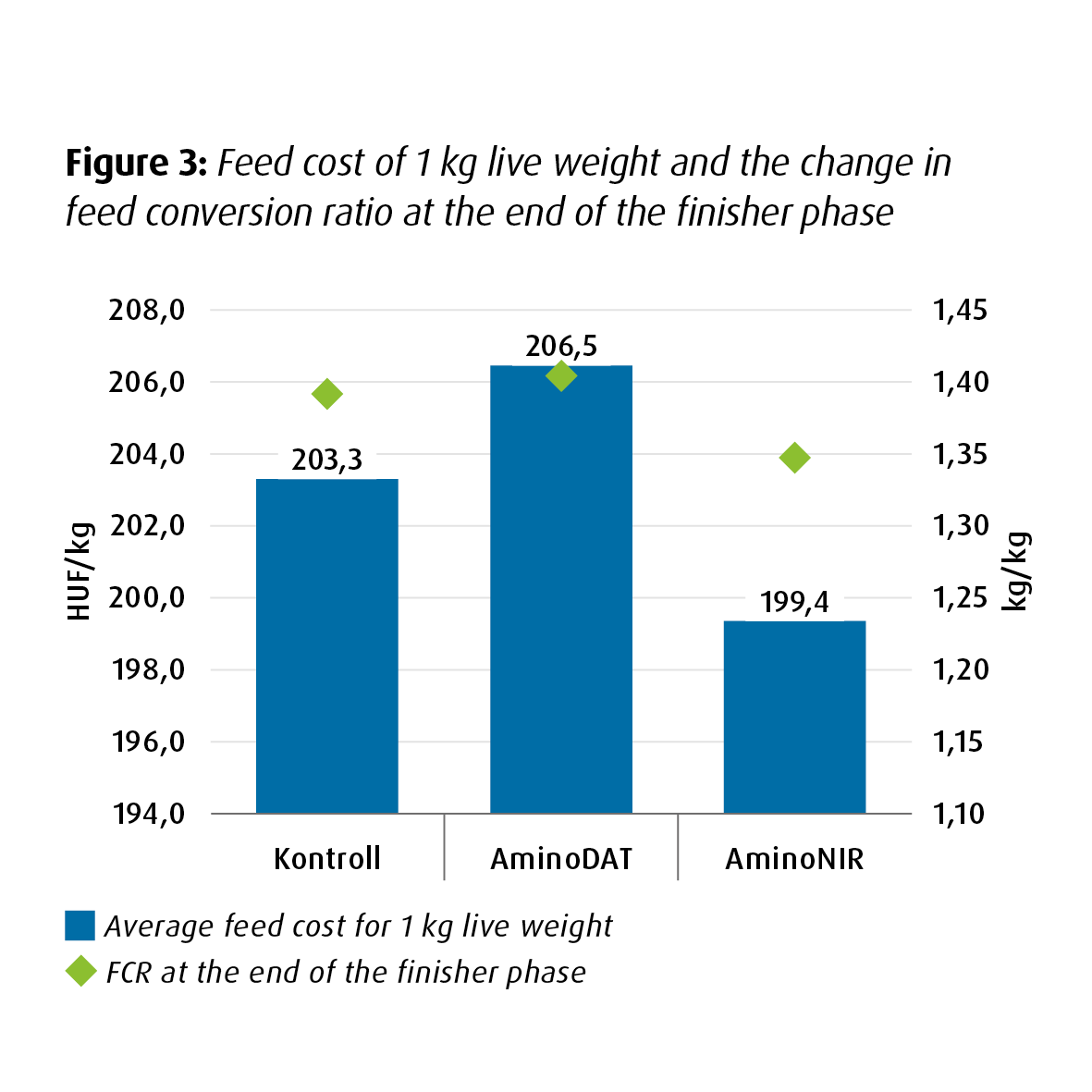 As maximizing profitability is a primary objective in commercial poultry production, profitability analysis constitutes an important component of the evaluation of feeding trials and includes assessing the contribution margin generated by each treatment. When all major production costs incurred by commercial poultry farms are taken into account, including the cost of day-old chicks, energy, labour, veterinary treatments and litter material, the feeding strategy that generates the highest contribution margin per square metre provides the greatest overall profitability. In the present evaluation, the contribution margin was defined as revenue minus feed costs, with calculations performed using the broiler market price of HUF 413/kg for Week 8, 2026. Compared with the control feed, applying the AminoDAT recommendations increased the contribution margin per square metre by HUF 77, whereas feeds formulated on the basis of AminoNIR results increased it by HUF 480 (Figure 4).
  Conclusions and recommendations
Based on the results of the present study, it can be concluded that the increased amino acid levels recommended by the AminoDAT increased final body weight; however, from an economic perspective, this feeding strategy did not prove to be more profitable than the control feed. In contrast, feeds formulated on the basis of AminoNIR measurements reduced feed costs while simultaneously improving production performance, resulting in better profitability. In the future we would like to focus on further cost optimization and evaluating the effect of this feeding concept in diets containing a higher proportion of by-products.
Summary
In conclusion, our findings demonstrate that prediction of the digestible amino acid content of individual feed ingredients with NIR technology improves both production efficiency and profitability. The benefits of precision technologies applied in feed manufacturing are therefore also reflected in the economic performance of broiler production.
Dr. Anita Juhász
Product manager
Bonafarm-Bábolna Takarmány Ltd.
Dr. Péter Kovács
Agricultural economist