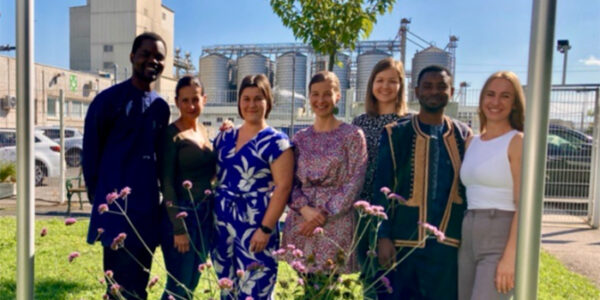
This summer we hosted two dedicated African students from the Kaposvár campus of the Hungarian University of Agriculture and Life Sciences (MATE) who wanted to learn and expand their practical experience at Bonafarm-Bábolna Takarmány Ltd. Both students are studying for their master’s degree in animal nutrition and feed safety engineering and wanted to deepen their theoretical knowledge in practice. The students were from Chad and Nigeria. Although the agricultural sectors in their home countries operate under very different climatic and economic conditions than in Hungary, their aim is the same: to expand knowledge, firmly believing that sustainable development is the key to the future of agriculture.
During the weeks the interns spent at our company, we provided a comprehensive overview of the feed production process. From recipe formulation and quality assurance to laboratory testing and manufacturing technologies, they gained hands-on insight into the work processes. They had the opportunity to see how research and development is performed, how feed mills operate, what nutrition practices are in place in farms, while also learning how logistics and the examination of samples connect to these systems. During their stay, they visited several sites and had the opportunity to learn about the management technologies used for different animal species.
Source: Bonafarm Group
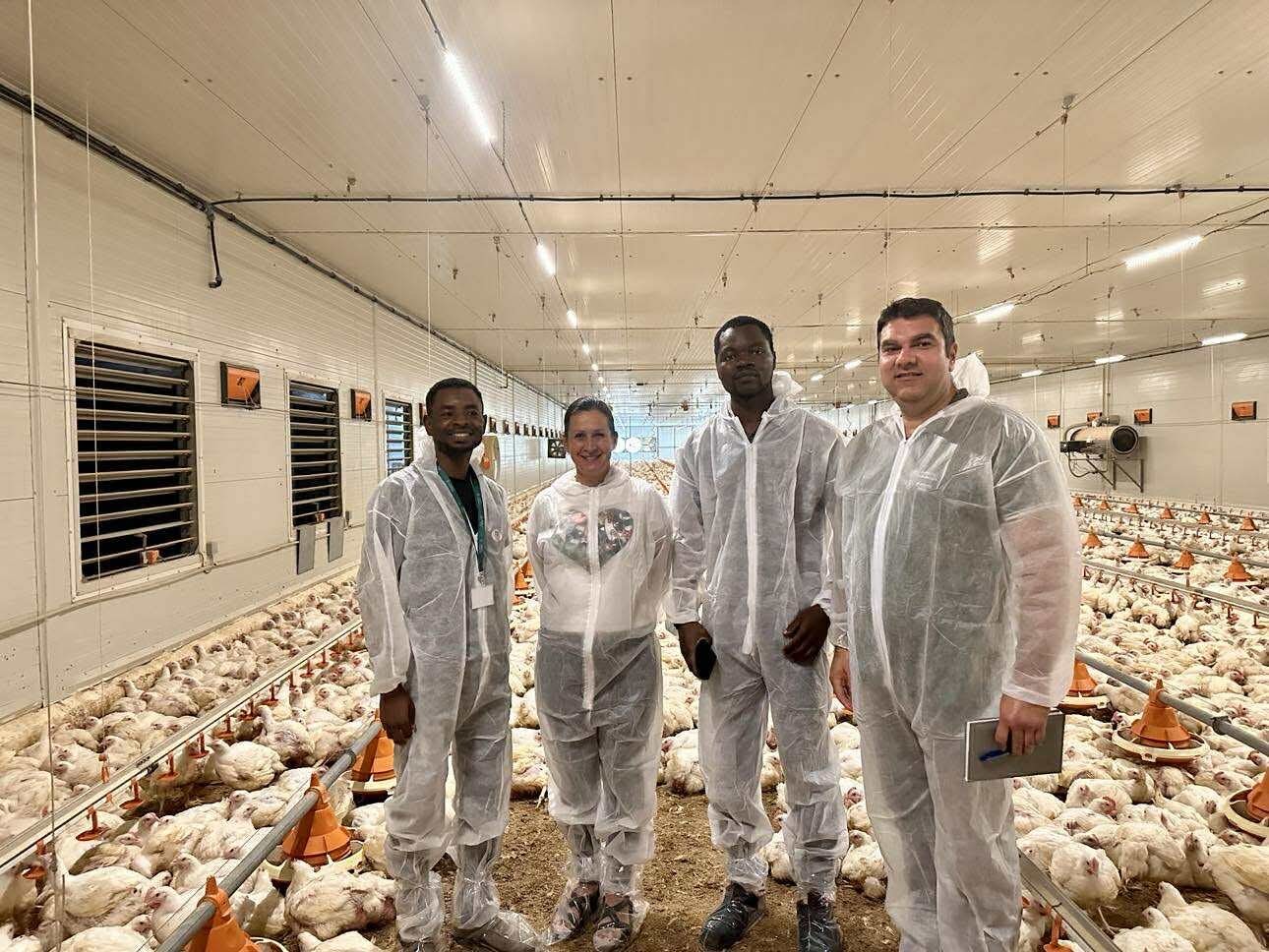
At the broiler chicken farm of FP-Bestbird Ltd. in Győrszentiván, they learned about modern solutions in large-scale broiler systems. At this site the company operates 4 barns of 1100 m², using state-of-the-art automated systems to rear a total of 81,630 birds. The Big Dutchman technology implemented on this farm includes a complex feeder, drinker, ventilation and climate control system that allows for precision broiler farming: precise control of temperature and air flow are key factors determining the performance, health and welfare of the animals. The next site they visited what is the commercial layer farm of Bábolna Tojás Ltd. that houses 83,000 Tetra SL layer hybrids. The farm consists of 5 barns with enriched cage systems and free-range housing. The visit provided an opportunity for the interns to compare the operation of different management systems and to observe how the management system influences egg production, feed efficiency and the behaviour of the animals.
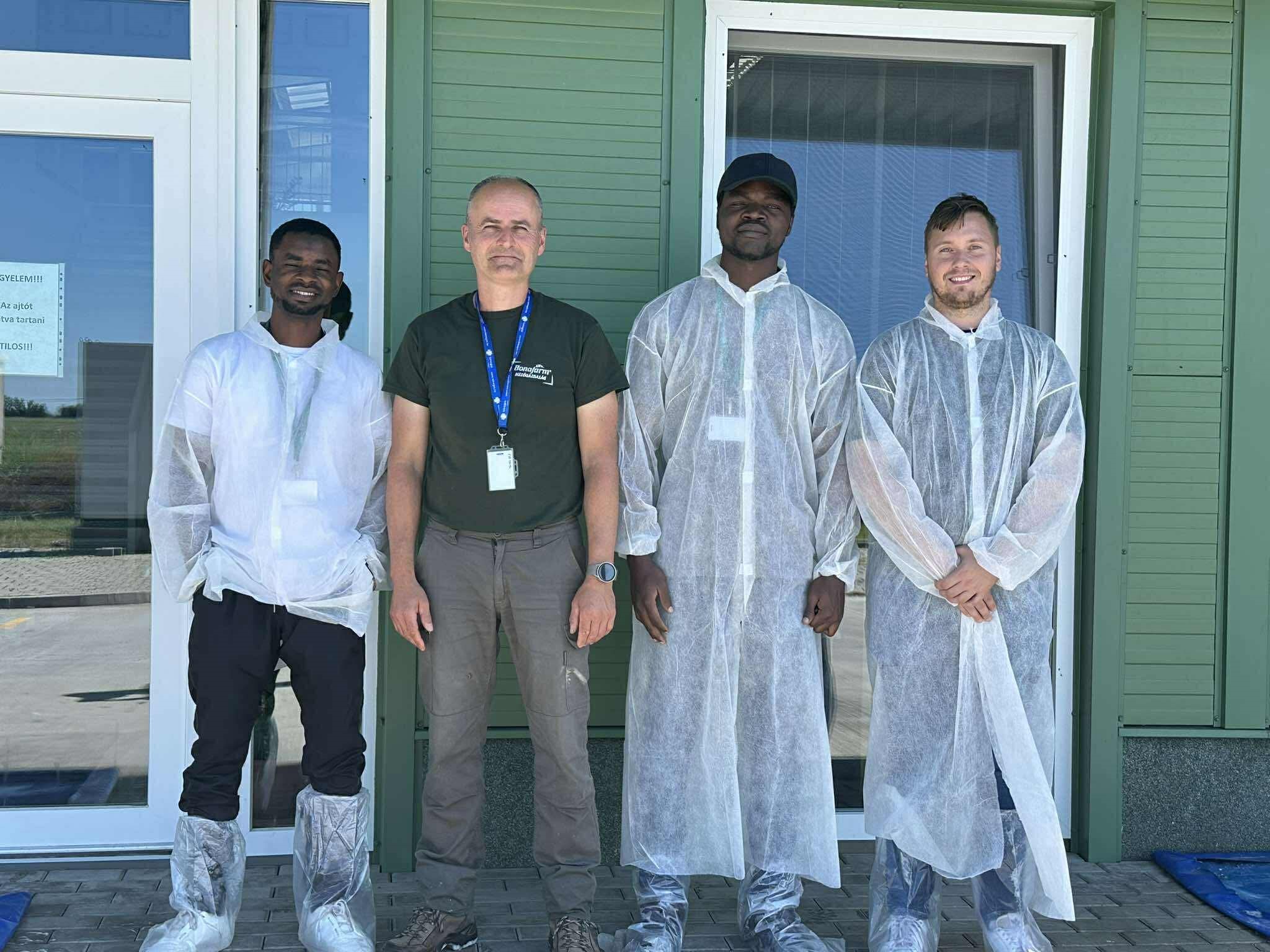
The interns learned about another branch of the animal breeding sector when they visited the dairy farm of Agroprodukt Ltd. in Marcalgergely, where they gained insight into the housing and management system used in large scale Holstein Friesian farming.
Source: Bonafarm Group
The Holstein Friesian breed has a genetic potential for outstanding milk production but housing, feeding, animal health and management factors have to be strictly aligned to realise this genetic potential. Modern technology, optimised nutritional protocols and precise production management technologies used on the farm provide a good basis to make the most of this genetic potential, while also providing a good balance between the profitability of milk production and animal welfare. The interns got an overview of how daily milking activities are scheduled, how shifts are coordinated and how the systems of workforce and production management are coordinated to allow for continuous and efficient production. They also learned about the farm management system that monitors production parameters, feed intake, body condition and health status of the herd in real time to support decision-making processes. Manure management was also demonstrated, including the use of the manure separator, that separates animal waste into liquid and solid fractions to improve the environmental sustainability of the farm and to rationalise the management of resources. The interns thus gained thorough knowledge of how a modern dairy farm works, where an integrated system of nutrition, technology, management and environmental protection makes it possible for the animals to achieve high levels of production while also fulfilling animal welfare requirements.
Source: Bonafarm Group
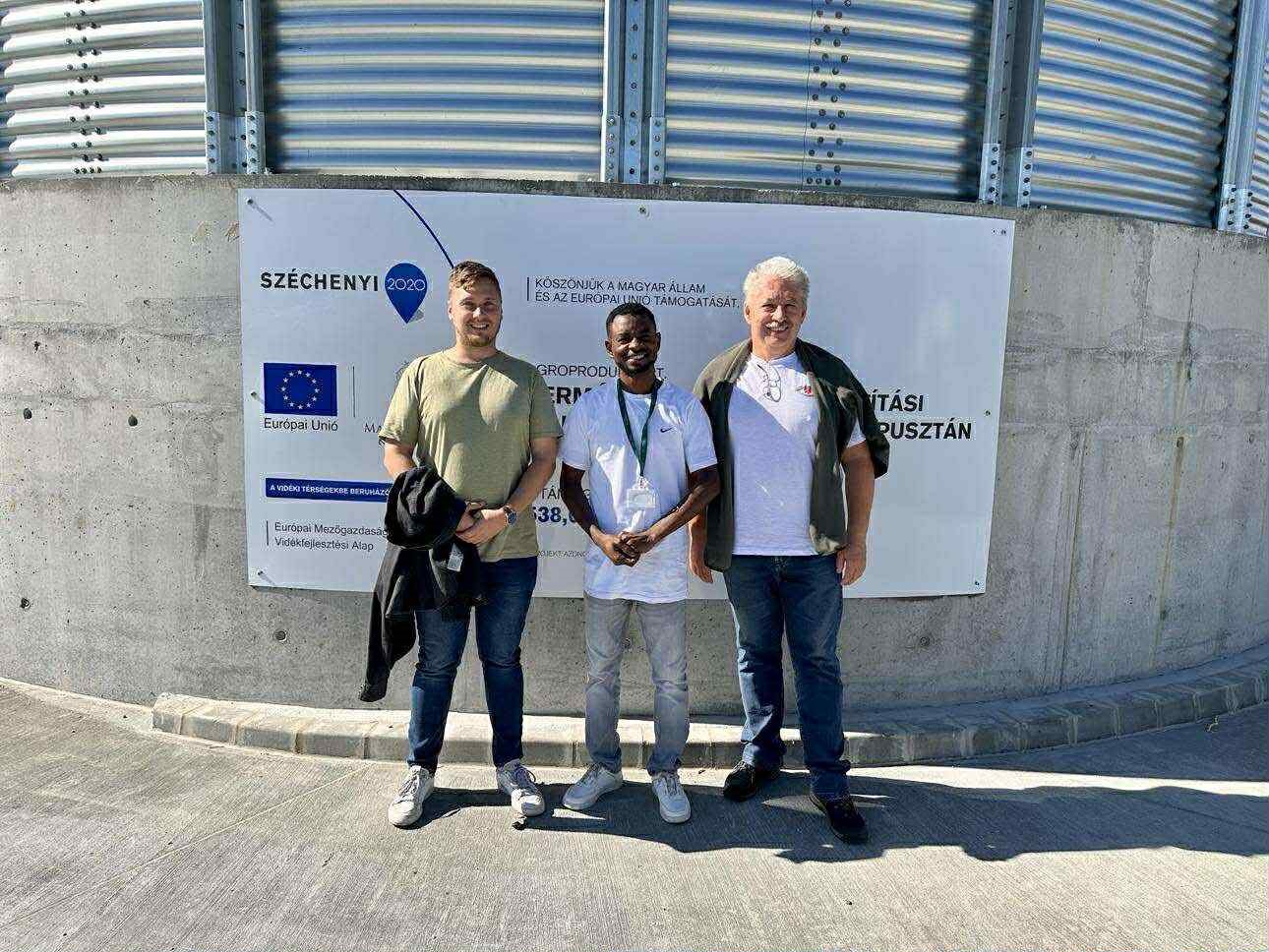
At our logistics site the interns could see the complexity of the feed manufacturing and seed production processes, as well as the operation of related technical and organizational systems. We opened our new silo complex in 2025, where we could show state of the art solutions in grain storage and handling, including the grain unloading augers and the automated control of material flow, which forms the basis of efficient logistics processes. They could walk through our warehouse system to gain insight into the operation of the feed and seed production lines, as well as the steps of feed processing technologies from crop intake through primary and secondary hoppers, to cleaning, the dehulling line, drying chambers and the threshing unit, all the way to final weighing. In the secondary cleaning unit, the technological processes of seed cleaning, chemical seed treatment and bagging were also demonstrated. As part of the program, the interns also visited our repair shop to see how maintenance of machinery and operational safety tasks are carried out on a daily basis to ensure the continuous operational readiness of the infrastructure. This visit provided a detailed overview of the integrated system of handling, processing, storage and logistics we use for raw material management, reflecting the integrated quality management and engineering approach of the Bonafarm Group.
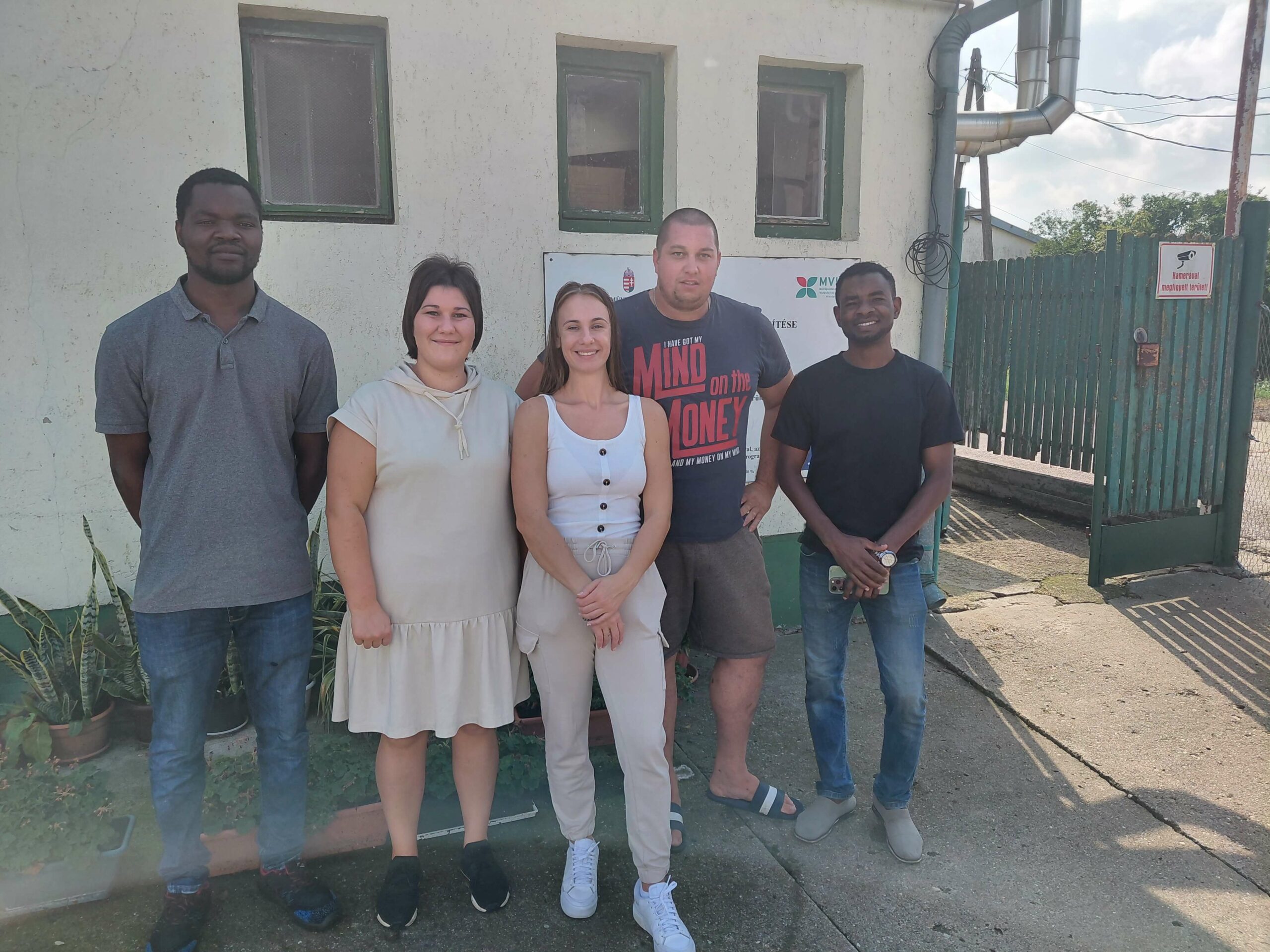
Source: Bonafarm Group
The interns visited the sow farm of Tiszaszentimrei Mezőgazdasági Ltd. to learn about production structures and technological processes in modern swine breeding. The farm houses 800 sows with Topigs TN70 mother line and DanBred boar lines genetics. This program allowed the interns to follow the main phases of the production cycle from breeding to fattening. They could see how the sows are kept and managed in individual stalls during gestation, how artificial insemination is performed, how the farrowing unit operates and which technological processes are used in piglet rearing and fattening. We showed them how the automated milk feeding and liquid feeding system works to provide optimal nutrition to all age groups. We explained the role of teaser boars in the insemination process, as well as the steps of the selection and monitoring protocols that are used to maintain the genetic pool. In the farrowing unit and the nursery they could see the critical points in piglet rearing and how feeding strategies are adapted to specific age groups. During the visit we emphasised the role of hygiene and biosecurity measures on the farm, which are the fundamentals of production safety. We showed them how the concept of dirty and clean changing rooms works in practice and why complying with rules for entrance and disinfection is important. During the farm visit the interns could see how breeding, rearing, feeding and animal welfare management processes are integrated, and how strict adherence to production technologies and precision farming contribute to maximising genetic potential.
Source: Bonafarm Group
By getting involved in the work of the Research and development (R&D) division at Bonafarm-Bábolna Takarmány Ltd., the interns gained a broad overview of the feed development process, from ideas to implementation. One of the main elements of the internship program was providing visits to the feed mills at five of our sites, so the interns could get a detailed insight into the site-specific features of the feed production process. The interns were also actively involved in establishing the scientific foundation of research and development projects. Their tasks included the systematic review of scientific literature, as well as the collection, organization and interpretation of information relevant to development activities. During this work, they processed international scientific publications, research reports and feed industry databases, with particular focus on topics aligned with current R&D directions. Through their literature review activities, they learned how to critically evaluate published data and identify relationships between experimental results and practical applications. This work not only provided the scientific background of ongoing research projects but also contributed to the R&D team’s decision-making processes, while allowing the interns to become directly involved in real-life research workflows. The interns also participated in another part of the development process: pilot-scale production trials and laboratory experiments related to new products; learned how to collect representative samples and contributed to the processing and evaluation of experimental results. Overall, this provided them the opportunity to gain direct experience in the practical application of research outcomes and in the implementation of development processes within an industrial environment.
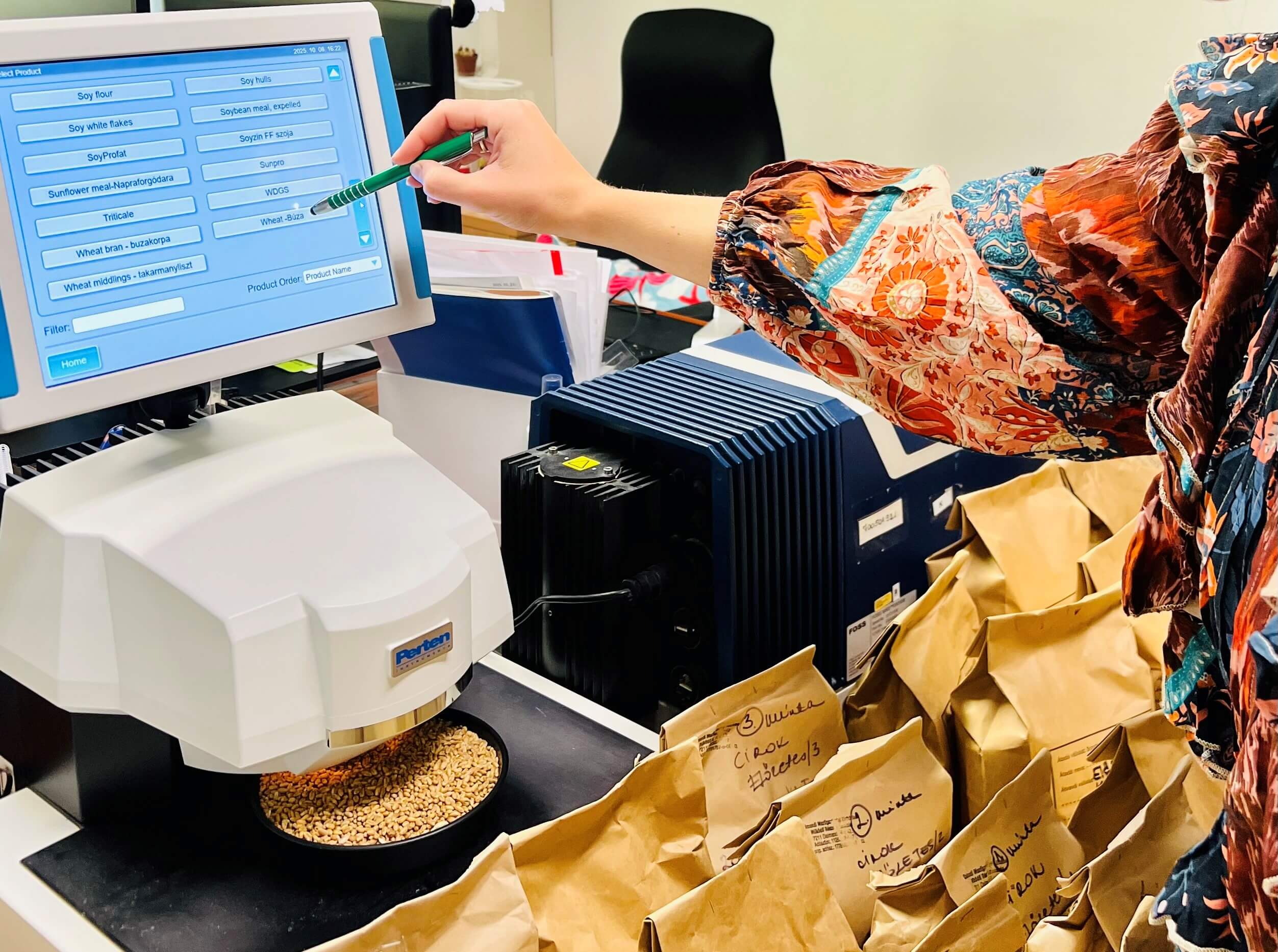
One of the key areas of our R&D activities is near-infrared spectroscopy (NIR), which was presented in detail by the company’s in-house NIR engineers. In addition to gaining insight into the operation of benchtop NIR instruments, the interns were also introduced to in-line NIR systems that measure and monitor the nutrient composition, the moisture, crude protein, fibre and fat content of raw materials and finished products in real time during feed production. They became familiar with sampling and sample preparation protocols, the principles of developing calibration models and the integration of NIR analytics into the company’s quality assurance and production control systems.
In Bonafarm-Bábolna Takarmány Ltd’s accredited laboratory, the students learned about feed analytical testing methods, including the determination of moisture, ash, crude protein, fat and fibre content. In addition, they were introduced to PCR-based (polymerase chain reaction) detection techniques, which enable the sensitive and accurate identification of genetically modified DNA sequences, thereby supporting the verification and use of GMO-free raw materials. During the program, the participants gained insight into the operation of the laboratory’s analytical equipment as well as the data processing and documentation systems used for managing measurement results. During analytical testing procedures the interns also acquired detailed knowledge of the operating principles, the main components and the practical applications of chromatography instruments.
Getting an overview of the system-level operation of the Bonafarm Group provides an excellent opportunity for interns to gain a comprehensive, hands-on understanding of the entire agricultural value chain, from feed production and product development to animal husbandry, crop production, logistics and quality assurance processes. The synergy between the different business sectors enables students to understand the relationships within modern agricultural operations and to acquire a broad professional experience that provides a strong foundation for their future careers. This means that Bonafarm Group offers not only practical training but a genuine learning and development environment, where knowledge, experience and innovation are integrated to shape the future of agriculture.
This collaboration proved to be a valuable learning experience not only for the interns but also for us, providing new insights. The students gave us a detailed overview of the current state and areas of development in agriculture in their home countries.
The intern from Chad highlighted that agriculture and animal husbandry are the backbone of the national economy in Chad, as it ensures food security, provides a living and forms cultural identity. Although the country faces challenges such as climate change, limited infrastructure and feed shortages, it has significant potential to increase productivity through sustainable farming practices, innovation and initiatives such as the dairy camel farm project implemented with professional support from Hungary. This serves as an excellent example of how international partnerships can contribute to the development of resilient livestock systems and improve the added value of local resources. By investing in modern feeding solutions, animal health developments and the strengthening of agricultural data systems, Chad can gradually achieve higher levels of self-sufficiency and prosperity.
The intern from Nigeria drew attention to the fact that livestock production and feed manufacturing play a key role in sustainable food production and are essential to global food security also. According to him, although Nigeria also faces numerous challenges, including climate extremes, infrastructural shortcomings and limited access to agricultural resources, these can be effectively addressed through research, innovation, educating farmers and international cooperation. He stressed that advances in animal nutrition and knowledge transfer are indispensable not only for Nigeria, but for the whole world to keep up with the food demands of an increasing population.
By the end of the summer, we no longer regarded them as interns, but as friends. Their openness, sense of humour and perseverance were truly inspiring. We taught them how the world of Bonafarm works – and they reminded us that the essence of agriculture is the same everywhere: care, passion and continuous learning.
Two continents with a shared value: creating a sustainable future for agriculture based on knowledge and cooperation.
Fanni Széles
NIR engineer
Fédra Borbély
product manager
Bonafarm-Bábolna Takarmány Ltd.