
Mycotoxins are a major food safety risk factor and represent a threat to both animal and human health. These compounds are secondary metabolites produced by filamentous fungi and pose a significant economic and health challenge for the feed and the food industry.
 The effect of mycotoxins on human health
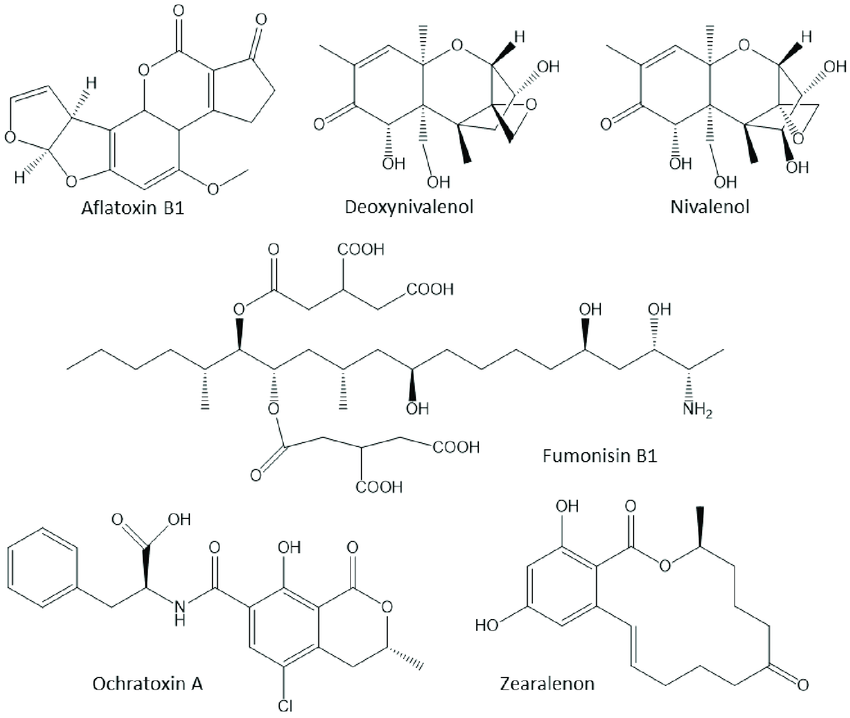
These toxic metabolites are a chemically heterogeneous group, with some compounds causing kidney and liver damage, while cytotoxins and neurotoxins are either carcinogenic on endocrine disruptors. Some of them are mutagens or can cause immunosuppression. Currently over 400 mycotoxins have been identified and less than 20 of these pose a concern to human or animal health (Agriopoulou at al., 2020). Exposure to mycotoxins can happen by eating contaminated foods (meat, milk, eggs) from animals that are fed contaminated feed, and thus pose a direct threat to consumers.
The current relevance of mycotoxins
Today climate change, extreme weather conditions and inappropriate storage conditions may all promote the growth of mycotoxin producing fungi. This is why all stakeholders of the food and feed industry should have strict control and preventive strategies in place to ensure the safety of both consumers and livestock.
Mycotoxin control and management have significant cost implications all over the world, however, comprehensive data on global costs are not available. Investment in appropriate treatment strategies will bring a return on the long term through the protection of human health and the minimisation of economic losses.
Bonafarm Group is committed to implementing efficient mycotoxin control. Mycotoxin management is a complex process spanning from the fields to food (farm to fork). Our company has developed its strategy step-by-step:
- Seed selection: we use stress-tolerant hybrids.
- Soil cultivation practices: we reduce the risk of fungal infections by removing crop residues, preserving the soil microbiome and providing nutrient supplementation.
- Plan protection: we apply preventive measures against fungal infections of the crops.
- Irrigation: we provide adequate irrigation in periods of drought.
- Timing of harvest: crops are harvested at the optimal time point to avoid over-maturing and damages.
- Appropriate storage: feedstuffs are stored under optimal conditions and we ensure their quality through regular sampling and laboratory tests.
- Testing with multiple methods: incoming feedstuffs are screened using rapid tests, followed by detailed laboratory analyses.
The testing of feedstuffs begins at harvest, with strict controls at every stage of storage, transport and feed manufacturing. Our accredited laboratory applies state-of-the-art UHPLC-MS-MS technology that ensures rapid and precise identification of mycotoxins. We also work in close cooperation with our suppliers who must also comply with strict testing requirements.
Last year we have performed over 10,000 mycotoxin tests, half of them were rapid tests and the other half were analyses performed at our accredited laboratory. We have set thresholds that are stricter than required by regulations.
Results and future plans
Our group of companies develops its methods for mycotoxin control continuously.
We have participated in small scale maize trials in cooperation with the Cereal Research Non-Profit Ltd. in Szeged and Dr. Ákos Mesterházy between 2017 and 2020 to select stress tolerant hybrids. The researchers of the institute challenged different hybrids with fungi species producing three different mycotoxins (DON, fumonisin and aflatoxin) to study the resistance and the toxin contamination of the grains. The results were surprising: certain hybrids were up to 10 times more resistant than others. These trials made it possible to identify hybrids that are more resistant and thus carry a reduced risk of fungal infections (Mesterházy et al., 2022).
In the future we aim to develop our rapid and laboratory testing methods further, to implement the newest analytical methods and to strengthen our partnerships with the livestock farms and suppliers. With these developments we wish to minimise the risk of mycotoxins and ensure that consumers are offered only safe and high quality products.
Bea Herczig
Senior Laboratory Manager
Bonafarm-Bábolna Takarmány Ltd.